If you’re a small business owner staring at your marketing budget spreadsheet at 11 PM, wondering whether $500 a month will actually move the needle or if you’re just throwing money into the void, you’re not alone.
The uncomfortable truth? Most small businesses either spend too little and see nothing happen, or spread their budget so thin across every shiny platform that nothing works well.

Here’s what actually matters: the right budget isn’t about what you can afford to spend it’s about what you can afford to learn, test, and scale.
Let’s break down exactly how much you should invest, where to put it, and what realistic results look like at each level.
What “Real Results” Actually Means (And Why Most Businesses Get This Wrong)
Before we talk numbers, we need to get brutally honest about what you’re trying to accomplish.
Most business owners say they want “more customers” or “better ROI.” But those goals require completely different strategies and budgets.
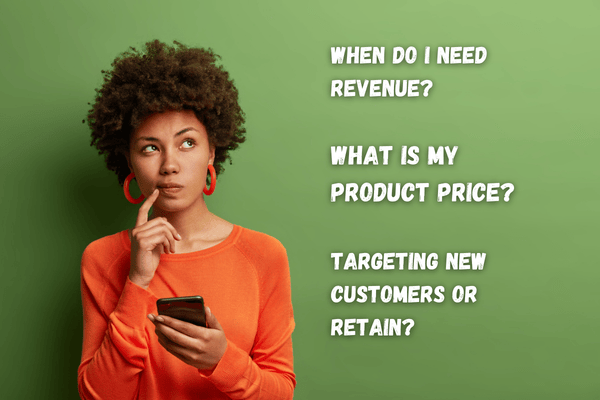
Ask yourself these three questions:
-
Do you need revenue this month, or are you building for next year?
If your business has immediate cash flow needs, you’ll invest heavily in high-intent channels like Google Ads where people are actively searching for what you sell. If you’re playing the long game, you’ll allocate more toward SEO and content that compounds over 6-12 months.
-
Are you selling a $50 product or a $5,000 service?
A $50 e-commerce product needs volume and a tight cost-per-acquisition. A $5,000 consulting service can justify higher costs per lead because one client pays for months of marketing. Your ticket price fundamentally changes what “good results” means.
-
Are you trying to acquire new customers or maximize the ones you have?
Getting new customers is expensive. Re-engaging past customers or building loyalty with current ones costs a fraction and often delivers better ROI. If you’ve never invested in email marketing or retargeting, you might be leaving 30-40% of potential revenue on the table.
The budget trap: Businesses fail when they want immediate leads, long-term brand building, AND customer retention all on $300/month. You can’t do everything. You need to pick your primary goal and fund it properly.
The Real Numbers: What Each Budget Level Actually Delivers
Let’s get specific. Here’s what different investment levels realistically produce not the glossy agency promises, but what happens in the real world.
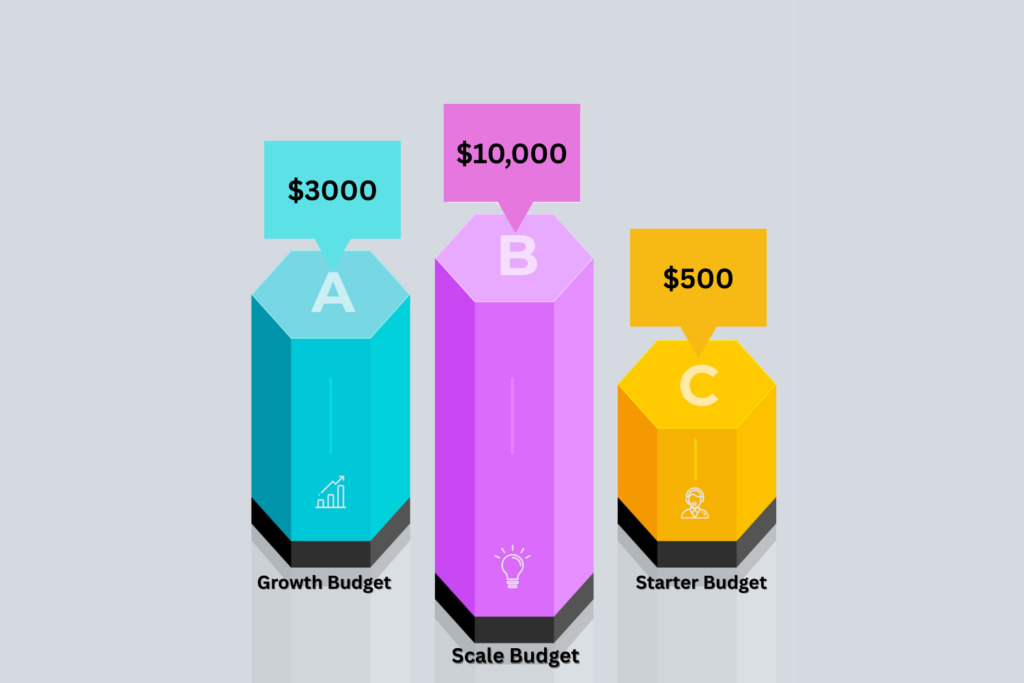
Starter Budget: $300-$500/month
Best for:
Brand new businesses testing the waters, local service businesses with limited competition
What you can actually do:
- Claim and optimize your Google Business Profile
- Run small, hyper-targeted Google Ads campaigns (think: 3-5 highly specific keywords in your immediate service area)
- Basic local SEO: get your business listed correctly across directories
- Maybe one social platform with organic content and very limited boosted posts
Realistic outcomes:
You’ll generate 2-5 qualified leads per week if you’re in a local service business with decent conversion rates. This isn’t scaling this is learning. You’re figuring out which keywords convert, what messaging resonates, and whether people actually want what you’re selling at your price point.
The hard truth:
At this level, you’re in data collection mode. You’re not going to “win” your market. You’re proving whether your business can convert digital traffic into paying customers. If you can’t make $500 work profitably, $5,000 won’t save you you have a product or offer problem, not a budget problem.
Growth Budget: $1,000-$3,000/month
Best for:
Established local businesses, growing e-commerce stores, B2B companies with proven product-market fit
What you can actually do:
- Meaningful Google Ads campaigns targeting multiple high-intent keywords
- Meta (Facebook/Instagram) or TikTok ads for awareness and direct response
- Retargeting campaigns to capture people who visited but didn’t convert
- Consistent SEO work: regular blog content, technical optimization, link building
Realistic outcomes:
You should generate 15-50 qualified leads per week, depending on your industry and conversion funnel. More importantly, you now have enough volume to actually optimize. You can A/B test landing pages, refine your messaging, and identify your best-performing channels.
This is where most small businesses should operate once they’ve proven basic profitability. You have enough budget to run real campaigns while building long-term assets (SEO content, email lists, retargeting audiences).
Scale Budget: $3,000-$10,000/month
Best for:
Businesses ready to aggressively capture market share, multiple locations, competitive industries
What you can actually do:
- Sophisticated multi-channel campaigns across search, social, and display
- Comprehensive retargeting and email automation sequences
- Serious content marketing and SEO to own your category
- Advanced tracking, attribution, and conversion optimization
Realistic outcomes:
50+ leads per week with increasingly predictable cost-per-acquisition. You’re not just generating leads you’re building systems. Your marketing becomes a machine where you know that X dollars in reliably produces Y revenue out.
The strategic shift:
At this level, you’re not just running ads. You’re building a brand presence, capturing market share from competitors, and creating marketing assets that compound (organic search rankings, large email lists, strong retargeting audiences).
Enterprise Budget: $10,000+/month
Best for:
Established companies in competitive markets, businesses with proven unit economics, looking to dominate
What you can actually do:
Everything. Full-funnel strategy, multiple campaign layers, comprehensive content, advanced automation,and detailed attribution modeling.
Realistic outcomes:
Market dominance in your category, predictable and scalable customer acquisition, and strong brand recognition.
How to Allocate Your Budget (The Priority Framework That Actually Works)
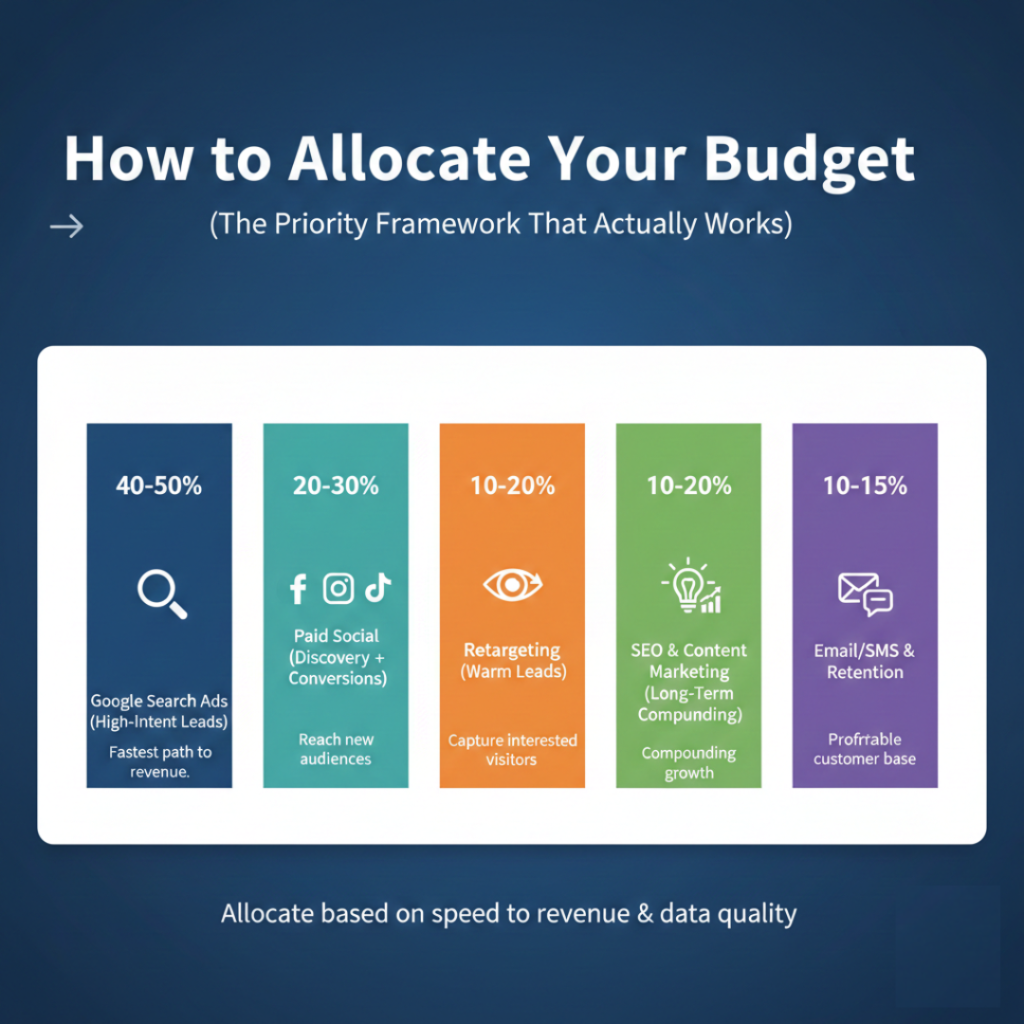
Here’s the mistake: spending equally across every channel because you’re afraid of missing out. Here’s what works: allocating based on speed to revenue and data quality.
For most small businesses, use this allocation:
40-50% → Google Search Ads (High-Intent Leads) People searching “emergency plumber near me” or “best CRM for small business” are ready to buy. This is your fastest path to revenue. Start here, prove ROI, then expand.
20-30% → Paid Social (Meta/Instagram/TikTok for Discovery + Conversions) These platforms are excellent for reaching people who don’t know they need you yet, and for retargeting those who showed interest. Visual businesses (restaurants, salons, e-commerce) often see great returns here.
10-20% → Retargeting (Capturing Warm Leads) Shockingly underutilized by small businesses. Someone who visited your website is 5-10x more likely to convert than a cold prospect. Set up retargeting pixels immediately.
10-20% → SEO & Content Marketing (Long-Term Compounding) This pays off slowly but compounds beautifully. A blog post ranking on page one can deliver leads for years without ongoing ad spend.
10-15% → Email/SMS & Retention (Often Overlooked, Always Profitable) Your existing customers and email list are gold. A monthly newsletter, special offers, and automated follow-up sequences often deliver 2-5x ROI compared to cold acquisition.
Adjust based on your business model:
- E-commerce: Increase social and retargeting
- B2B services: Increase search and LinkedIn
- Local services: Increase Google Business Profile optimization and local search
The Test-and-Scale Method (How to Avoid Wasting Money)
Most small businesses scale too fast or give up too early. Here’s the process that actually works:
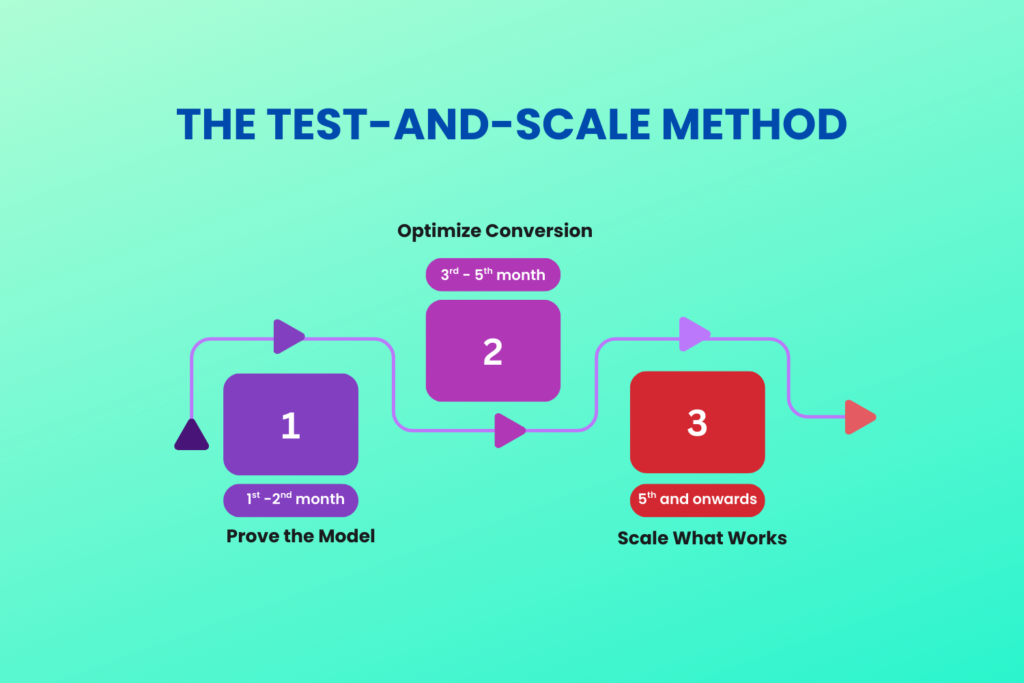
Phase 1: Prove the Model (Months 1-2)
- Start with your minimum viable budget ($500-$1,000)
- Focus on ONE primary channel (usually Google Ads for local services)
- Track religiously: cost per click, cost per lead, lead-to-customer rate, revenue per customer
- Goal: Prove that $1 in marketing generates $2+ in revenue
Phase 2: Optimize Conversion (Months 2-3)
- Now that traffic is coming, fix your leaks
- Improve your landing pages, refine your offer, tighten your sales process
- A 20% improvement in conversion rate is the same as a 20% budget increase but costs nothing extra
Phase 3: Scale What Works (Month 4+)
- Double down on channels showing positive ROI
- Pause or dramatically reduce spend on channels that aren’t working
- Add one complementary channel (if search ads work, add retargeting; if social works, add email)
Real example:
A local HVAC company started with $800/month on Google Ads. They generated 12 leads and closed 3 jobs worth $8,500 in revenue. The owner wanted to immediately jump to $5,000/month. Instead, they spent month 2 improving their phone intake process and website. Conversion rate jumped from 25% to 40%. They then scaled to $1,500/month and predictably generated 5-6 jobs monthly. By month 6, they were at $3,000/month with a documented 4:1 return on ad spend.
The Minimum Investment for Actionable Results
Here’s the number most small business owners don’t want to hear but need to understand:
To see measurable, actionable results within 60 days:
- Local service businesses in low-competition markets: $500-$1,000/month minimum
- Competitive local markets (lawyers, roofers, etc.): $1,500-$2,500/month minimum
- E-commerce or B2B: $2,000-$3,500/month minimum
Below these thresholds, you’re collecting data points, not driving business outcomes. That doesn’t mean it’s wasted learning is valuable but set your expectations accordingly.
Why these minimums matter:
- You need enough traffic to make statistically significant decisions
- You need enough budget to show up consistently (not just 3 days a month)
- You need room to test and optimize without going broke
The Mindset Shift That Changes Everything
The businesses that succeed with digital marketing make one critical mindset shift: they stop treating marketing as an expense and start treating it as an investment with measurable returns.
An expense is something you minimize. An investment is something you optimize.
When you spend $2,000 on ads and generate $6,000 in revenue, the question isn’t “how do I spend less?” It’s “how much can I scale before the returns diminish?”
Digital marketing isn’t magic, and it’s not a mystery. It’s math. Invest enough to generate meaningful data, optimize relentlessly, and scale what works.
The question isn’t whether you can afford to invest in marketing, it’s whether you can afford not to while your competitors are figuring it out.